Page 4 of 7
Re: Temp gauge testing
Posted: Sun Mar 08, 2026 11:50 am
by BennSport
spacecad3t wrote: Sun Mar 08, 2026 11:33 am
Do you motorsports the car? You wont really need something better than stock for everyday driving. Better fans go a long way too- but I would definitely start by figuring out if the radiator less efficient than it should be. Are your fans operating correctly? I don't have an early car, but the fan speed resistor wiring is ALWAYS trash and you may just be running on low speed fan and not getting the high speed fans.
I just took the radiator to a shop to get power flushed so in fairly confident it’s not that. The car doesn’t get used for motor sports at all but I’m just trying to regain original factory cooling capacities. I’m going to do some fan testing, but one of the issues is that the gauge reads on the third line constantly even while freeway driving, so airflow isn’t the main issue.
Re: Temp gauge testing
Posted: Sun Mar 08, 2026 11:54 am
by spacecad3t
Do you have a infrared thermometer? My temp gauge was riding hide and I confirmed temps all over the engine bay finding my gauge was off by alot. I pulled the dash and reset the gauge reference. Now the gauge matches what I see in the engine right near the gauge sender.
Re: Temp gauge testing
Posted: Sun Mar 08, 2026 11:56 am
by BennSport
Yes, I do! Where should I take the temp measurements on the engine?
Re: Temp gauge testing
Posted: Sun Mar 08, 2026 2:12 pm
by spacecad3t
Well, since the gauge reads from where its threaded in, the gauge sender area of the head is an ok proxy. Assume some difference compared to the actual coolant. I also like to check the hose and inlet temps, as this is coolant coming into the head from the radiator.
Sorry the DME Temp sensor is circled here, but they are right next to each other...
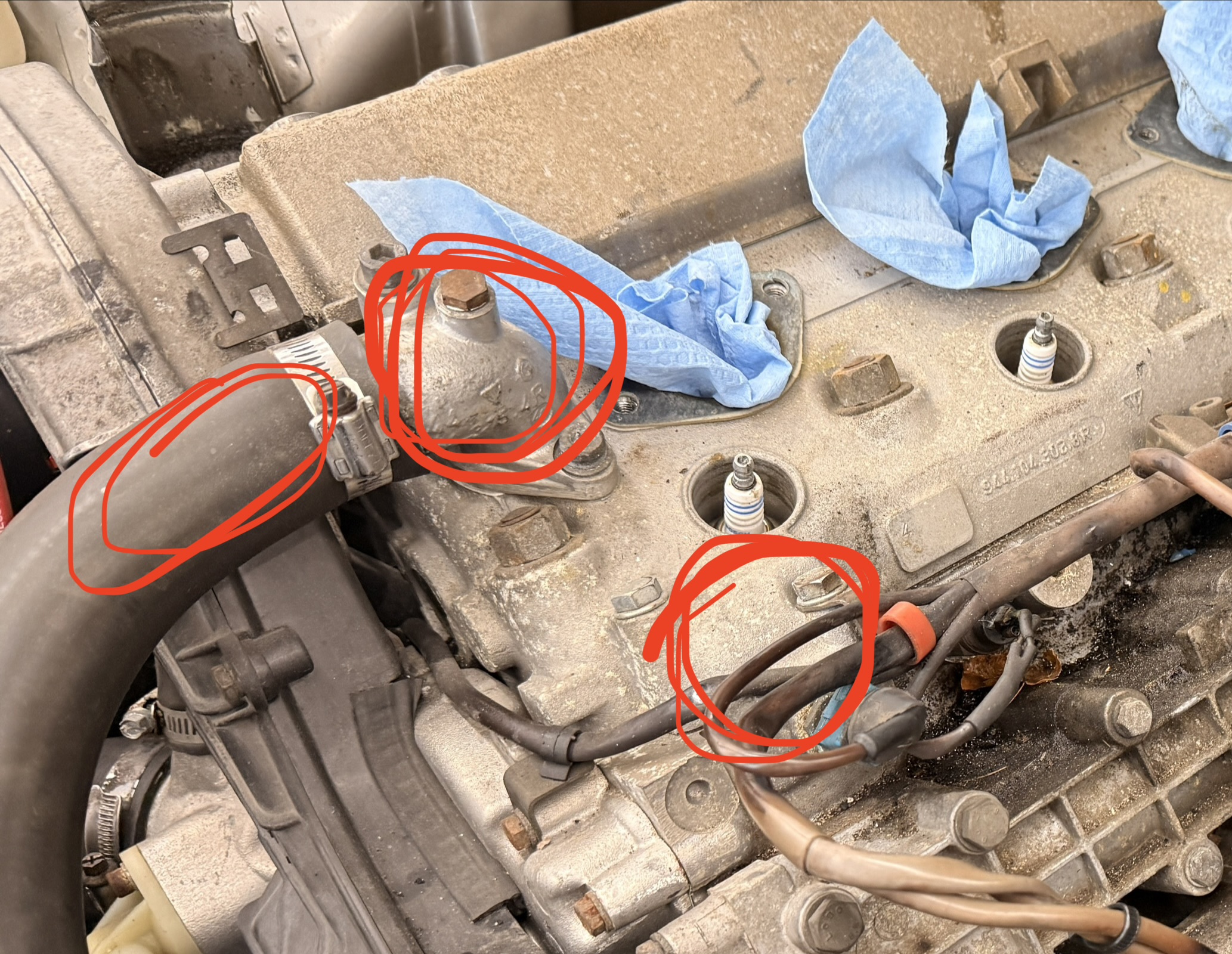
- IMG_0253.jpeg (1.51 MiB) Viewed 746 times
Other diagnostics you can use a infrared thermometer for: Intake runners, Exhaust runners, head temps (all over), radiator temps (from the top) and the water pump/thermostat area. I have found miss-fires and bad cylinders by reading intake and exhaust temps and finding 1 cylinder (or more) WAY OFF from the others. I also use it to check tire temps when attending motorsports events.
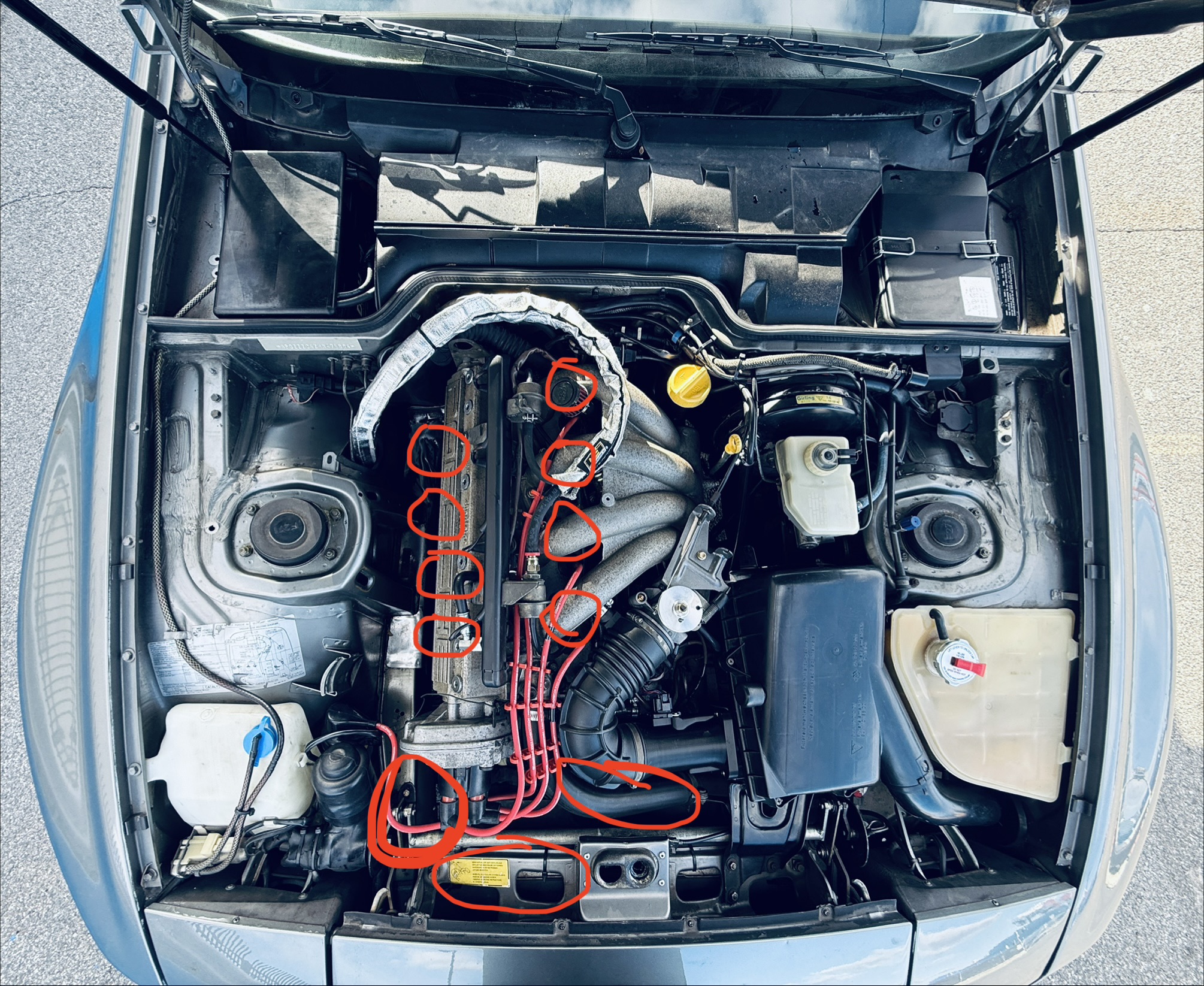
- IMG_1383.jpeg (2.35 MiB) Viewed 746 times
Re: Temp gauge testing
Posted: Sun Mar 08, 2026 4:12 pm
by Tom
You can test the gauge by pulling the wide spade connector off the sensor and connecting it to ground via a 68 ohm resistor. The gauge should read right at the first, 80c, hash mark. The actual spec is 69.1 ohms, but 68 ohm resistors are more common and close enough.
Similarly, you can get a decent sense for the sensor's accuracy by letting the motor sit over night so that everything is at ambient temp, then check the resistance between the wide spade connector on the sensor and ground. You should see readings in this range:
830 Ω at 60°F
645 Ω at 70°F
500 Ω at 80°F
It's all laid out in our test guide, available
here 
Re: Temp gauge testing
Posted: Mon Mar 09, 2026 1:32 pm
by BennSport
Well here in Salt Lake the ambient temp is about 65 and I’m getting readings of 140 ohms. Pictures of inside the cylinder to come but things aren’t looking good as they stand right now, pulled one of the spark plugs and there was a drop of water on it.
Re: Temp gauge testing
Posted: Mon Mar 09, 2026 2:08 pm
by Tom
Poorsche44 wrote: Mon Mar 09, 2026 1:32 pm
Well here in Salt Lake the ambient temp is about 65 and I’m getting readings of 140 ohms. Pictures of inside the cylinder to come but things aren’t looking good as they stand right now, pulled one of the spark plugs and there was a drop of water on it.
140 ohms at 65F ambient is too low. If that is a good reading (?) then the gauge would sit right at the top of the white band at the bottom when the car is cold like that -- does it? To test you need to remove the wire and check resistance between the sensor and ground. Don't test with the wire still on the sensor, and don't test between the wire's connector and ground. If tested correctly, and if the dash gauge shows about 60C (at the top of the lower wide white mark) when at ambient temps, then that sensor is bad.
Water on the plug isn't promising, but you never know. Let us know what the camera reveals...
Re: Temp gauge testing
Posted: Mon Mar 09, 2026 3:05 pm
by BennSport
Well I think the issue is much worse than when I even attempted to fix the head gasket, it looks like there’s standing water in every cylinder and every spark plug I pulled was wet. Photos are attached in order, ie first photo is cylinder 1 and so on
Ah that’s my issue, I checked with the wire still attached to the connector. I’ll check again just on the sensor without the wire connected.
Re: Temp gauge testing
Posted: Mon Mar 09, 2026 5:36 pm
by BennSport
At this point I’m so frustrated looking for a resolution that I’m ready to put a bottle of head gasket sealer in the engine

Re: Temp gauge testing
Posted: Tue Mar 10, 2026 6:13 am
by BennSport
Would my only option at this point be to pull the block and get it resurfaced at a machine shop? Everywhere I read online said I just had to clean the surface of the block and it’d be fine, but i was skeptical that it would seal well seeing the condition of mine. The surface felt smooth, but there was definitely some corrosion that I couldn’t remove even with a brass brush.